
Disclosure: This page may contain ads and affiliate links. We may earn a commission at no extra cost to you.
Views: 31
Disclosure: This page may contain ads and affiliate links. We may earn a commission at no extra cost to you.
Is your cat meowing at night and keeping you awake? Discover the emotional and physical reasons behind your cats meowing at night.
Table of Contents
Introduction
Are you struggling with your cats meowing at night? Those persistent cries can be both heart-wrenching and exhausting. But why does your cat meow so much during the night? Understanding your cat’s nighttime meowing can help you comfort them and ensure peaceful nights for both of you.
These midnight meows are more than just sounds—they’re messages from your beloved feline, who might be trying to tell you something important. Let’s dive into the world of cats meowing at night, unraveling the emotions behind those cries and finding ways to restore peace to both your nights and theirs.
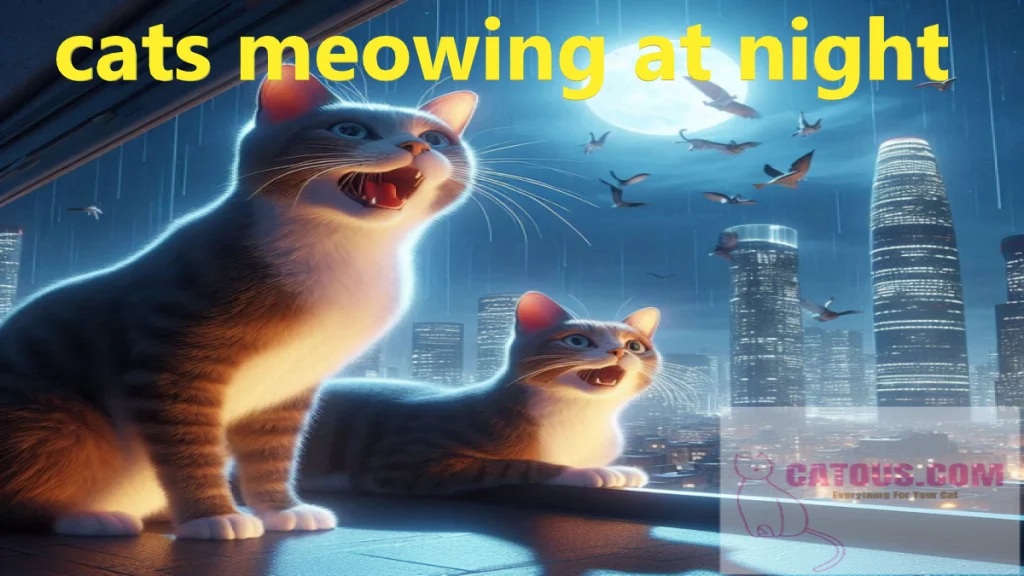
Why Do Cats Meow at Night?
Cats meowing at night is more than just noise—it’s communication. Whether your cat is hungry, lonely, or anxious, their meowing at night is a call for help. As their loving owner, it’s essential to understand the reasons behind your cat’s nighttime meowing and how to address it.
Loneliness and Seeking Attention
Your cats meowing at night might be a sign of loneliness. Cats often crave attention, and when the house is quiet, they might meow more at night to reach out to you, seeking your presence and comfort.
Hunger and Thirst
Sometimes, those midnight meows are simply your cat’s way of saying, “I’m hungry!” or “I need water!” Cats are creatures of habit, and if they’re used to a certain feeding schedule, they might remind you—loudly—if their needs aren’t met on time.
Boredom and Restlessness
Imagine being wide awake with nothing to do. Sounds frustrating, right? Cats are the same. If they haven’t had enough stimulation during the day, they might wander the house at night, meowing out of sheer boredom or frustration. They’re trying to find something—anything—to occupy their minds.
Health Issues
Sometimes, excessive cats meowing at night might be due to underlying health issues. If your cat’s meowing is unusual, it’s essential to consider their health. When your cat meows at night, they might be in discomfort and need veterinary attention.
The Emotional Side of Nighttime Meowing
It’s easy to get frustrated with a cat that won’t let you sleep, but behind those meows are feelings—emotions that your cat is struggling to express.
Fear of the Dark
For some cats, the night can be a source of anxiety. The dark might make them feel vulnerable, triggering fear and leading to those mournful cries. Your presence is their safety net, and when they can’t see you, they might panic.
Longing for Connection
If you’ve ever had a bad dream and reached out for comfort, you understand the feeling. Cats, too, long for that sense of connection, especially during the quiet, solitary hours of the night. Their meows may be a way of reaching out, hoping you’ll reassure them that they’re not alone.
Expression of Unmet Needs
Cats are intuitive creatures. If something in their environment isn’t quite right—whether it’s an uncomfortable bed, a closed door, or a forgotten toy—they’ll let you know. Their meows can be an emotional plea to have their needs acknowledged and met.
How to Respond to Your Cat’s Nighttime Meowing
Show Compassion and Patience
While it might be tempting to ignore those midnight cries in hopes they’ll stop, showing compassion can go a long way. Your cat isn’t just being annoying they’re trying to tell you something. Listen with your heart, and approach their needs with patience.
Establish a Routine
A consistent routine can help reduce your cats meowing at night. Feeding and playing with your cat at the same time each day can ensure their needs are met before bed, reducing the likelihood of meowing at night.
Provide Comfort
Consider leaving a light on or providing a cozy space for your cat to sleep in. If your cats meowing at Night out of fear or loneliness, these small gestures can make a big difference. Sometimes, all they need is a little reassurance that everything is okay.
Common Myths About Cats Meowing at Night
“Cats Only Meow When They Want Something”
While cats meowing at night to communicate needs, it’s not always about food or attention. Sometimes, their meows are an expression of emotions or discomfort, and dismissing them can overlook the deeper issue.
“Ignoring the Meowing Will Make It Stop”
Ignoring your cat meowing at night might not solve the problem. Instead, it could make your cats meowing at night worse, especially if their cries are driven by loneliness or anxiety.
“All Cats Are Noisy at Night”
Not all cats are night-time talkers. Some are more vocal than others, and excessive meowing at night can be a sign that something is off. It’s always worth exploring the underlying reasons rather than just chalking it up to a cat being a cat.
How to Reduce Excessive Nighttime Meowing
Increase Daytime Activity
One way to reduce your cats meowing at night is to increase their daytime activity. Keeping your cat active during the day can help tire them out and reduce restlessness, leading to less meowing at night.
Adjust Feeding Schedule
Try feeding your cat a small meal before bedtime. A full stomach might help them sleep through the night, reducing those hunger-driven cries.
Address Health Concerns
When your cats meows at night, it’s essential to rule out health issues. Regular vet check-ups can ensure that your cat’s meowing at night isn’t due to an underlying problem.
Conclusion
When your cats meowing at night, it’s a cry for understanding and connection. By tuning in to their emotional and physical needs, you can help reduce their nighttime meowing and create a peaceful environment for both of you. Remember, your cat’s meowing at night is their way of communicating, and with a little patience and compassion, those midnight cries can be calmed.
FAQs
Why does my cat meow so much at night?
Your cats meowing at night could be due to loneliness, hunger, boredom, or even health issues. Understanding the reasons behind their cries can help you address their needs.
Is it normal for cats to meow at night?
While some cats naturally meow at night, excessive nighttime meowing can indicate that something isn’t right. It’s essential to explore why your cat is meowing at night to find a solution.
What does it mean if my cat’s meow changes?
A change in your cats meow, especially at night, can signal health problems or emotional distress. Pay attention to any changes in their nighttime meowing and consult a vet if needed.
How can I tell if my cat’s meowing is a health issue?
If your cats meowing is accompanied by other signs like lethargy, loss of appetite, or changes in behavior, it might be time to visit the vet.
Can I train my cat to meow less?
Yes, with patience and consistency. Addressing the root cause of the meowing, providing sufficient stimulation, and reinforcing quiet behavior can help reduce excessive meowing.
Disclosure: This page may contain ads and affiliate links. We may earn a commission at no extra cost to you.
#CatMeowing #CatBehavior #PetCare #FelineHealth #CatLovers #NighttimeMeowing #CatParenting #CatAnxiety #PetAdvice #CatCommunication
Disclosure: This page may contain ads and affiliate links. We may earn a commission at no extra cost to you.